

Another Recap — On Opening Doors Over Closing Them
And why we need many curators, not few gatekeepers

Picking it back up from Christoph. He wrote about presence; I want to talk about what gets hidden by curation.
As we’re between some big client presentations for branding projects (which are all about connection and realness) and everyone is pushing for perfectness, I keep thinking: we need human nuance, errors, space for failure, and a place to show this. We need space for the disobedient, the strange. We need to teach our children (and ourselves) that challenge and friction are valuable, not problems to smooth away.
There was this piece in The Rumpus by Joanna Novak: “Human Error is the Point: On Teaching College During the Rise of AI.” The title captures what we’re losing in our rush toward frictionless efficiency. The real question isn’t whether AI makes mistakes - it’s whether we still value the mess of actual thinking.
And with all this, I’m struggling these days, in the midst of Dutch elections, with why certain themes get more traction than others. Some feel completely fabricated while others get neglected. When certain fears get attention, they feel urgent. But IRL, they aren’t. We don’t have a refugee problem as many people feel/think, we have a PR problem. (And off course we also have challenges to tackle). As Sander Schimmelpenninck wrote (in the Volkskrant, Dutch only), “we’ve spent twenty years telling xenophobic citizens they’re merely ‘concerned’ and must never be called racist—the perfect medicine to eliminate their last bit of shame, confirming that the world is simple, knowledge unnecessary, and blame always belongs elsewhere.” It’s all marketing. A very well curated kind of marketing.
But that word ‘curated’ there keeps nagging at me. Curation sounds good. I happen to feel confident in the curation I do for brands like mentioned above. It’s all thoughtful selection, expert guidance. But what’s the difference between curation and gatekeeping? Or PR and propaganda. Between helping people see clearly and controlling what they’re allowed to see?
I like to think that gatekeeping closes doors. This is what’s good, period. Master these approved texts or you’re not serious. It presents particular taste as universal law, pretends to be neutral when it’s actually specific values claiming to be the only values.
Curation opens doors. Here’s what excites me, and here’s why - my criteria, my blind spots included. If you loved this, try that. It’s opinionated but honest about being one view among many. I try to practice that with this newsletter…
The distinction matters because gatekeeping pretends to be curation. It wraps power in the language of taste, control in the rhetoric of quality.
But curation at scale becomes gatekeeping almost inevitably. A bookstore owner recommending books? Curation. That same person controlling every bookstore in the country? Gatekeeping, even with good intentions. (And we see this in our algorithmic feeds).
Ocean Vuong, in his Belle van Zuylenlezing, describes how this plays out for writers. At every juncture, “they are told to conform to conventional standards or else risk losing the ever-so-slim chance of publication, their prose forcibly pruned to something recognisable.”
Teachers, peers, agents, editors, sales departments - each checkpoint sands down the edges, optimises toward the recognisable middle. Vuong calls this the “factory of the voice.” By the time a book reaches readers, you might read “only the faded residue of a unique writer, if a residue even remains.”
This isn’t about bad actors. It’s about systems that, at scale, can only process the legible. The bigger the investment, the more risk-averse. Legibility becomes survival. If you’re a politician and dont talk about X you wont be seen, although X might even not be that relevant or interesting… It’s all the same system.
The alternative isn’t absence of taste - it’s multiplicity of it. What if instead of few gatekeepers, we had many curators? Overlapping, contradicting, arguing-with-each-other guides rather than a single canonical path? And what if this is not pushed by algorithms and commerce?
Yancey Strickler describes this shift through Dark Forest Theory - the idea that as public spaces become increasingly dominated by power (algorithmic, political, commercial), real conversation retreats into private spaces. “Everything public feels like an ad. Everything private feels real. The gap widens every day.”
This isn’t just about hiding - it’s about building. Networked communities instead of centralised platforms. Small groups creating their own private internets where ideas can develop without being immediately optimised for engagement or pruned for mass consumption. Not isolation, but architecture that preserves difference.
The question - in our work, in teaching our children, in democracy itself - isn’t whether to have curation. It’s whether we build systems that open doors or close them. Whether we preserve space for the disobedient, the strange. Whether we create many forests instead of one carefully tended garden.
Here’s what was good last weeks
On above’s topic: AI isn’t creating new gatekeepers, it’s cementing existing ones, turning the internet’s colonial biases into seemingly neutral infrastructure that determines what counts as ‘knowledge’ at all.
Deepak Varuvel Dennison shows the scale: English dominates 44% of web data while Hindi (7.5% of world population) represents 0.2%, and 97% of languages are ‘low-resource’ in computing. But this isn’t just representation—languages carry entire worlds of ecological knowledge, healing traditions, sustainable practices that never made it online. His father’s tumor shrank using traditional Siddha herbal medicine, yet the ‘all-knowing internet’ had nothing. AI trained on this skewed data amplifies hierarchies through ‘mode amplification’, overproducing dominant answers while marginalising rare knowledge. As AI-generated content floods the web and people rely on summaries instead of sources, we risk ‘knowledge collapse’, a feedback loop where underrepresented knowledge becomes invisible through algorithmic convenience, disconnecting future generations from centuries of wisdom we’ll need as climate paradigms fail. (On this topic: AP warns chatbots give biased voting advice)
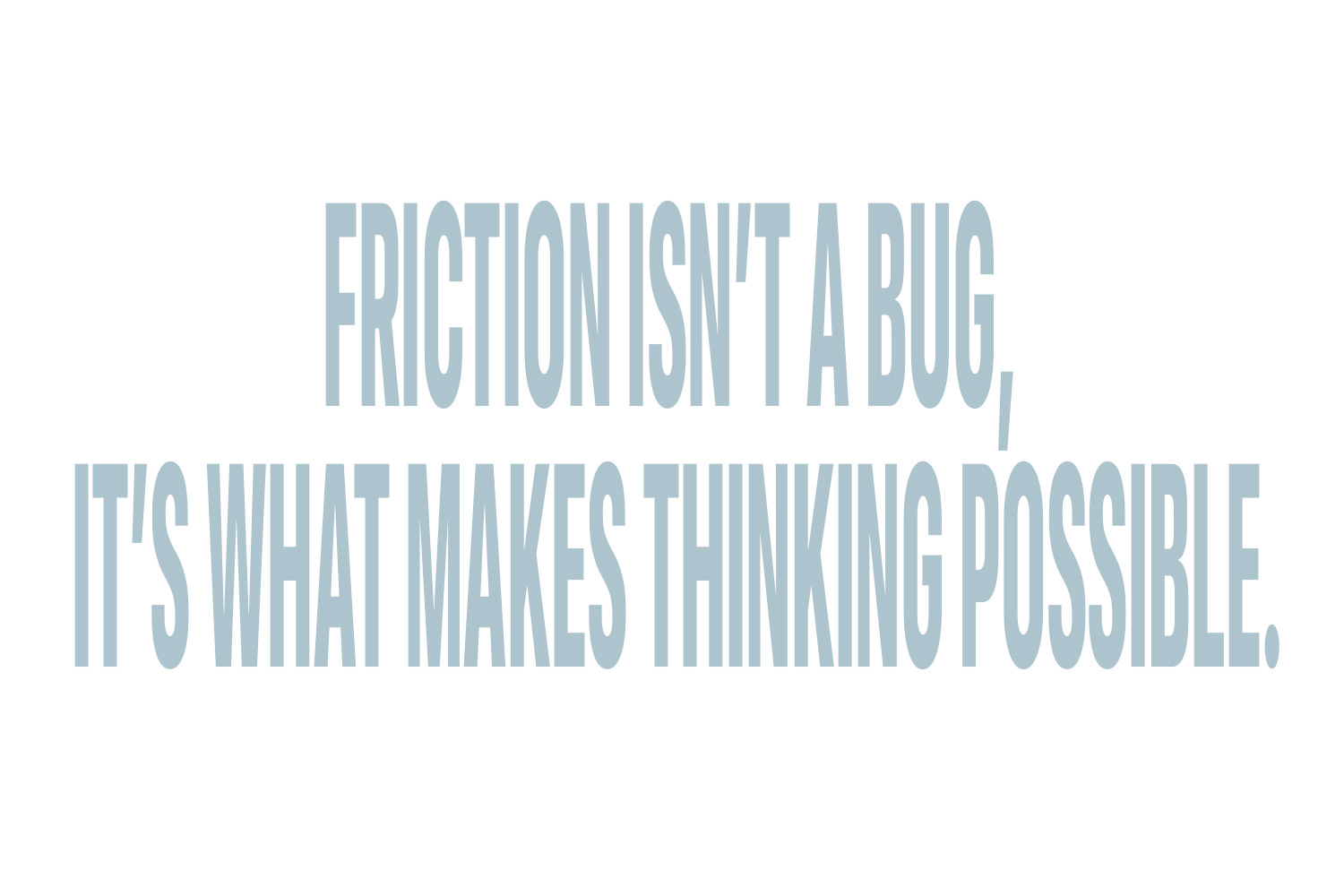
Elizabeth Spiers, founding editor of Gawker, describes early blogging as fundamentally different from social media: to participate in dialogue, you had to build something compelling enough that people would visit directly - “they had to come to your house and be civil before you’d give them the time of day.” Social media collapsed this into a frictionless town square where anonymity removes consequences and trolling requires no effort. Spiers credits early blogging’s friction - the effort required to build, link, respond - with helping her move from college Republican to registered Democrat in five years, constantly challenged by thoughtful exchange that’s now “drowned out by the firehose.” The lesson: friction isn’t a bug, it’s what makes thinking possible. Many curators in their own houses beats one algorithmic town square where everyone shouts. (via Public Announcement).
“Before the shadow of AI ever breached the blank page, the homogenization of contemporary writing was in full effect. This time the influence was commerce, which might be called the new face of authority. An inconspicuous ‘readable’ style sells because the prose resembles what is regularly digested in other parts of culture: newspapers, advertising, magazine articles, work e-mails.” — Samuel Jay Keyser
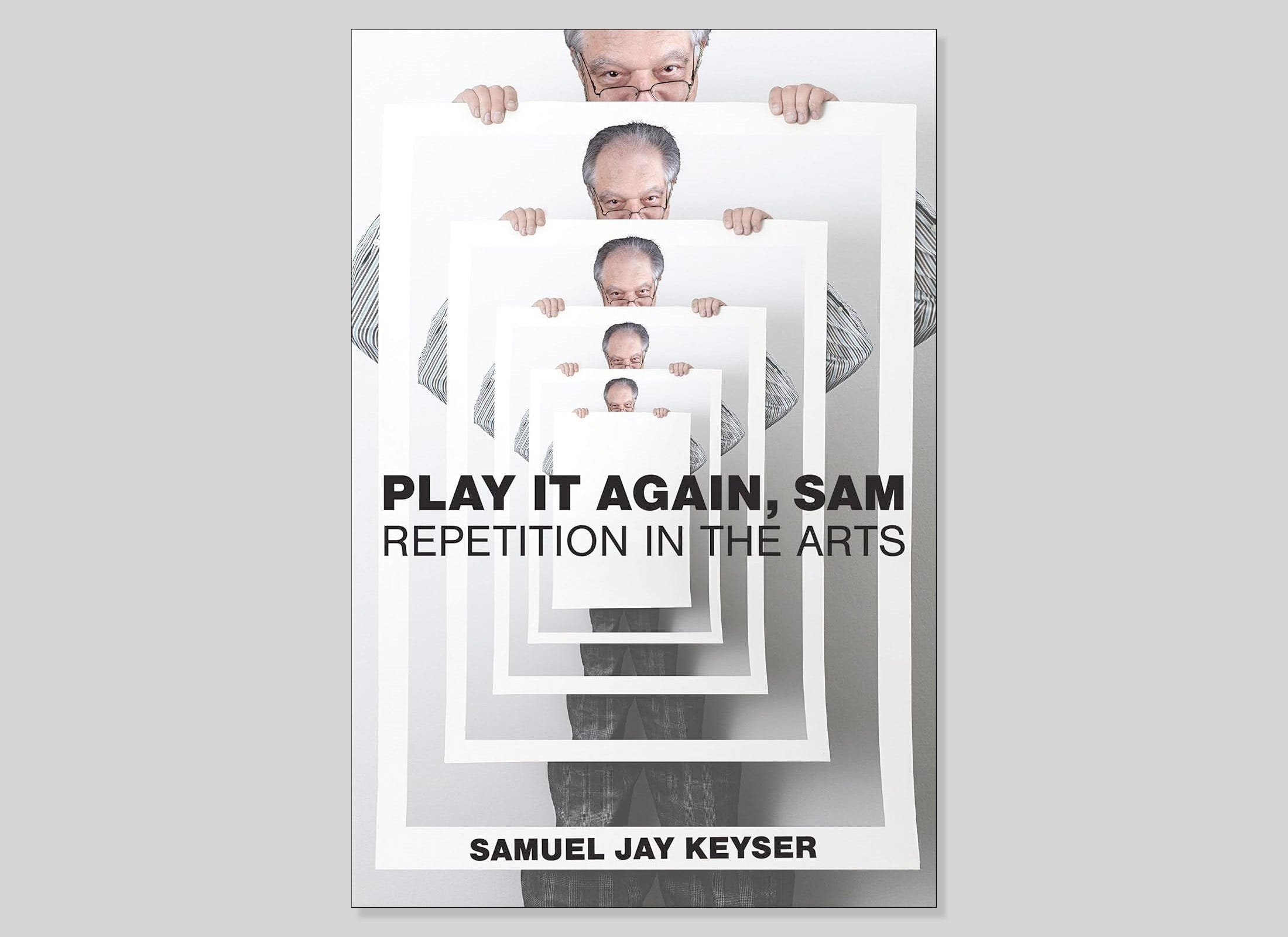
I really love order (is it a mild OCD?) and pattern recognition feels essential in how we discover interesting narratives for the brands we work with, so this article really speaks to that instinct. Samuel Jay Keyser argues that the pleasure of art often has less to do with what we see and more with how repetition and variation are structured. Whether it’s Caillebotte’s umbrellas and building lines forming hidden triangles, Warhol’s soup cans, or Roni Horn’s paired photographs, our brains light up when they detect ‘same/except’ patterns, like rhyme, but visual.
Art becomes a puzzle: repeated forms with just enough difference to keep us engaged. That act of spotting structure within chaos, order within variation, is what creates aesthetic satisfaction. In other words, form -not just story or symbolism- is what makes an image stick in the mind. (Go read Samuel Jay Keyser’s book Play It Again, Sam.)
🪟 Open windows
Cant wait to see Gerhard Richter at Fondation Louis Vuitton, Paris.
And cant wait to visit The MAK seeing the HELMUT LANG ARCHIVE
We’re all looking forward to Grace Wales Bonner becoming the Creative Director of men’s wear at Hermès
Everyone is a Strategist and No One is a Writer
Go follow School of Critical Design for a daily dose of important design/future/ai/technology/politics signals
Absolutely love this. A Kind Of Guise’s non-profit Souvenir Shop sources handmade goods from local artisans during their travels, celebrating traditional craftsmanship while donating all profits back to communities in the countries that inspire them.
Capturing the Codes of Youth: Winter Vandenbrink’s Street Realities
Sold out already but these two new works by Cleon Peterson are fire again!
Dave: The Boy Who Played the Harp review – it’s clearer than ever what a stunningly skilled rapper he is
Oríkì: Material Affirmations in Three Acts is the debut monograph of Nigerian artist Nifemi Marcus-Bello, spanning his three-part sculptural Oríkì series.

💿 On repeat while reading/traveling/working
The Boy Who Played the Harp by Dave (and James Blake)
We Were Juste Here by Just Mustard
Desire Single by Puma Blue
Call Me Silent by CIEL
Goodness by feeo
Living While Dying by fanclubwallet
& keep streaming and supporting Radio Hara 🍉
(And as always, more on Record Club)
🏁 End vibes
Hope to see you back next weeks!
Another Nothing / Something / Everything
Another good one! : )