

Another Recap — on Presence over Performativity
And why awareness transforms the gaze

I don’t share much.
After weeks of Joachim posting the opening thoughts for each newsletter, written with seemingly little limitation, I’ve once more realized our differences (which makes for a pretty good merger of perspectives, so hire us). When I do formulate something, I (painfully) limit myself so that it has to mean something for me first, to potentially add value in an overcrowded space. And so here I am, asking myself: what is worth sharing, anyway?
I’ve always had a complicated relationship with the personalized side of the internet and with first-person sharing as its main mode of operation, as the intentions behind the system that facilitates it often seem volatile. At the same time, I’ve been a junky for its free flow of information and pulp. We are what we eat, but that might not be something we’re happy with.
Within the ever-growing corporate colonization of former sanctuary Cyber Space, I’ve deliberately maintained a fairly anonymous online existence, which in this ecosystem increasingly became seen as hurtful to one’s professional credibility. Visibility is currency. To not be visible is almost a refusal to value yourself. Or at least that is how the circumstances make you feel. It was in thinking about that refusal, some time ago, that I came to a conclusion: much of what passes for engagement is rooted in voyeurism. That explains my discomfort with participating.
Freud, among the most influential thinkers on voyeurism, described it as the pleasure of seeing what is hidden, of observing without being observed. In the late-stage social media era, this impulse has been refined to near perfection. Platforms mostly reward the most polarizing thoughts, the most intimate exposures, and the content that grants the deepest access to the voyeuristic gaze. Every scroll, every click, every story becomes quietly compulsive. We watch and perform for watchers we may never meet. The voyeur and the performer have merged. I watch myself watching, and it becomes hard to maintain autonomy.
True eccentricity, the type that comes from within and is not incentivized by potential visibility, has become increasingly rare. As a result, this is not a system I identify with, not because I consider myself eccentric, but because all of my heroes are or were. We need eccentrics to imagine what others cannot. Knowing this, I wonder: is there even a way to participate while remaining true to what I aspire to?
My favorite art critic and cultural observer Dean Kissick once wrote: “Life has in many ways become a fiction. Reality is vanishing under its own representations. We are teetering on the precipice of the real, and that is okay.”
Reality feels like it is slipping, and all I can do is watch, and reluctantly perform when there is truly no other way. Yet through the act of writing this, I’ve come to another realization: despite the online ecosystem capitalizing on it, human nature has long been entangled in the voyeuristic gaze. There remains something compelling, something deeply human, in observing and in quietly seeking to understand others and, more importantly, ourselves. Even if it is compulsive, even if it borders on the perverse. Like any addiction, it distorts and reveals in equal measure, pulling us in with the promise of meaning, of intimacy, of truth glimpsed through the screen. And yet, as with any drug, what emerges in that altered state can be unexpected, even illuminating. In a surprising way, there may be value to be found in places that were not designed to produce it.
Perhaps voyeurism is not just a social impulse, but a condition of consciousness itself. To see is to separate oneself from what is seen, and in that distance lies both knowledge and alienation. Observation becomes a form of participation, an attempt to bridge the gap between the self and the world. It is through looking that we learn empathy, that we sense belonging, that we recognize the other and, by contrast, define who we are. The gaze, in this sense, is not merely invasive, but connective, a way of touching without possession. The key is to remain aware that we are, in fact, gazing voyeuristically.
Jacques Lacan observed: “In the scopic field, the gaze is outside, I am looked at, that is to say, I am a picture. What determines me, at the most profound level, in the visible, is the gaze that is outside.”
Being conscious of this gaze opens a subtle possibility. We can participate without being consumed by the demands of attention and exposure. We can observe, reflect, and even contribute while maintaining a measure of autonomy. There is value in engaging selectively—choosing when and how to share, where to focus our attention, and what insights to cultivate—so that our participation does not simply feed the endless circulation of visibility, but becomes a deliberate act of presence. Awareness transforms voyeurism from a passive compulsion into a means of understanding ourselves, others, and the systems we inhabit.
In this world where attention and visibility have become the main metrics of value, the simplest form of resistance may be the most profound: to choose what to share and when, and more importantly what not to share. Use your insights elsewhere, in spaces where you have more agency as a participant, whatever that may mean for you personally. Not as an act of radicalism or self-conscious virtue, but as a quiet way to sustain a sense of autonomy today.
As I write this, trying to perform in the cacophony, I realize there may not need to be a point anymore. Not in the newsletter, not in these words. And that might be the point itself. I am not sharing anything specific. I am playing the third guitar in a noise band because that is how I see the world we live in. And this will quickly disappear or go untouched anyway, regardless of what I write. That is an enlightening thought for me personally.
“…because somewhere, amidst the chaos, if you pay enough attention, there is still a rhythm, a resonance, or, hopefully, a dissonance that sticks, that might be worth listening to.”
What I’ve written has little prominence and likely very little traction. Yet there is still value to be found in playing the proverbial third guitar, because somewhere, amidst the chaos, if you pay enough attention, there is still a rhythm, a resonance, or, hopefully, a dissonance that sticks, that might be worth listening to.
Even amidst trying to resist the exploitative use of the voyeuristic gaze by the tech overlords, there may arise an unexpected understanding of the human condition, because of it. A way to see critically what we could not before.
So, that is all this is: a quiet contribution to the noise, not as a solo performance, but as part of understanding it from within. One might hear something meaningful, even new, while reading it. And perhaps that is what makes it worth sharing, or at least it was for me.
Here’s what was good last weeks
On this topic of art, appropriation, and the market. In Vanity Fair, the great Nate Freeman profiles Richard Prince, exploring his provocative late-career work and the contradictions of his influence. Prince’s new series, “Folk Songs,” marks a return after several years and prompts reflection on the tensions between originality and commerce. He critically assesses the art world, noting the paradox of creating work that challenges authorship while simultaneously thriving within its market dynamics. Prince acknowledges his dual position as both an outsider and a celebrated figure, reflecting on how art’s value is shaped as much by cultural and financial forces as by creative intent. His self-awareness underscores the persistent friction between artistic intention and the institutional structures that define success, revealing a nuanced meditation on the role of the artist today
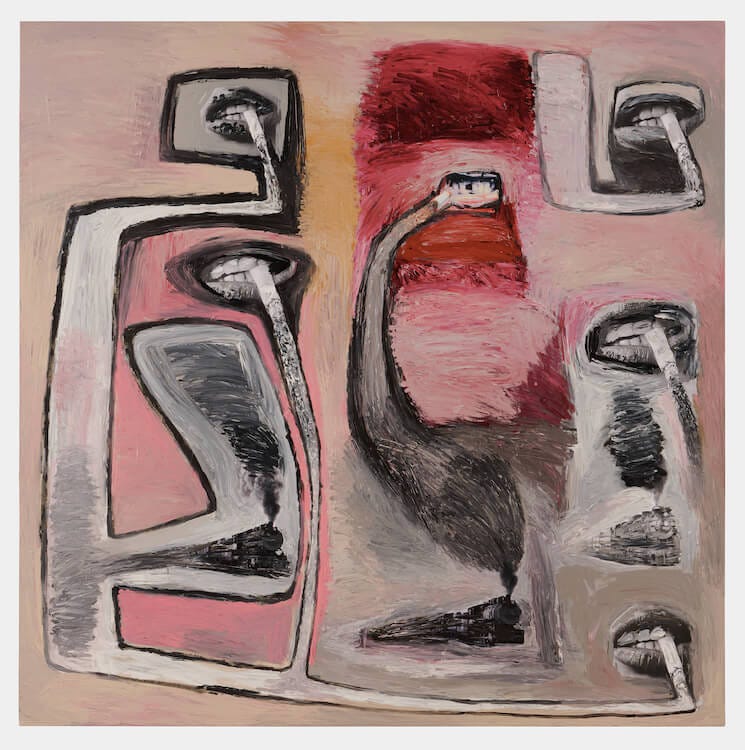
Shoukei Matsumoto argues that true work begins not with output or visibility, but with quiet acts of care and presence — like cleaning a space before entering it — as a way to participate without trying to dominate. His perspective hints at a way of being inside systems without performing for them. That quiet, intentional presence resonates with Christoph’s refusal to feed the logic of visibility, choosing instead a more deliberate, almost monastic form of contribution. Very curious to read Shoukei Matsumoto’s new book Work Like A Monk!
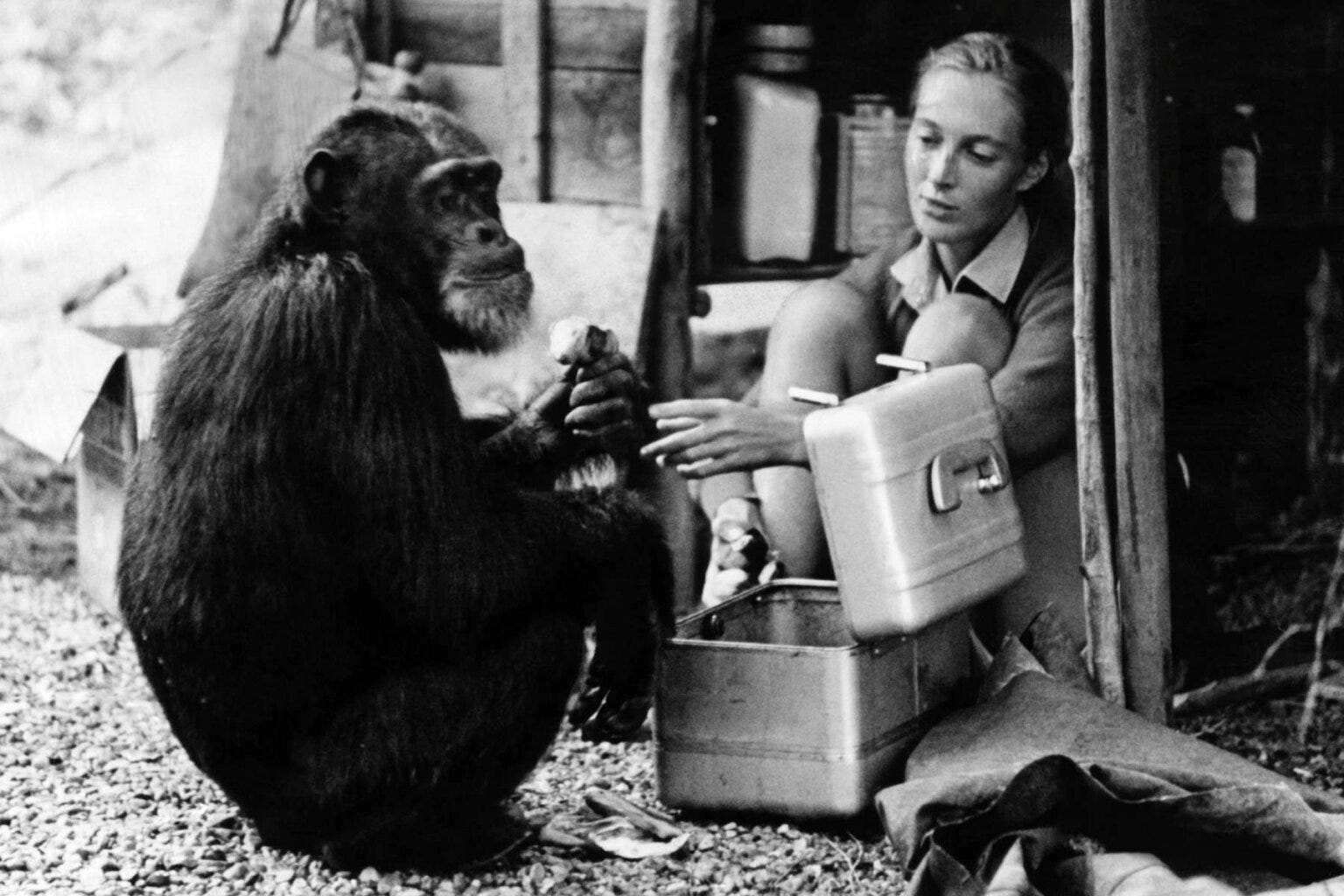
In this beautiful tribute on Jane Goodall’s life, her work appears as a form of devotion without spectacle. A quiet, enduring commitment to care rather than to be seen. Just like Matsumoto’s idea of entering through service and above’s third-guitar stance, her mission shows how one can contribute from within without surrendering to visibility as the measure of value
As I was listening to the NRC podcast episode with Hans Stegeman, chief economist at Triodos Bank, titled ‘we’re addicted to growth’ (dutch only), it struck me how his post-growth perspective carries the same underlying intuition: value does not have to come from more, louder, or bigger, but from consciously choosing less in order to create room for care, repair, and shared wellbeing. He frames restraint not as withdrawal but as a deliberate form of participation, one that resists the idea that visibility or growth are the only valid metrics of contribution. In that light, a different kind of agency appears, one rooted in maintenance, presence, and the subtle act of tending rather than producing. Love that. (on this topic, check out and follow Post Growth Guide)
🪟 Open windows
Attention is what makes us human.
We’re moving from provocation to relatability – from being seen to being remembered.
This is the dumbest stock market in history “Think of the scene… where passengers on the runaway New York subway car suddenly realize the hijackers have all left, and there is nobody in the driver’s cabin. Oops.”
Friction: The Cure for a Society Bored to Death via Creative Destruction
Really curious to see this one IRL: Equator Magazine
What the world needs now is groupcore.
The list of brands SSENSE owes money to by 1 Granary.
💿 On repeat while reading/traveling/working
Speak Daggers by Elias Rønnenfelt
All Systems Are Lying by Soulwax
Deadbeat by Tame Impala
Thank You for Almost Everything by Headache & Vegyn
One Last Nothing - Single by DARKSIDE
Saltworks by BEA1991
Some Like It Hot by bar italia
& keep streaming and supporting Radio Hara 🍉
(And as always, more on Record Club)
🏁 End vibes
Hope to see you back next weeks!
Another Nothing / Something / Everything
 |
|